Our Farm Story
Discover the mission and inspiration behind our farm, founded with passion and dedication.
The Hygge Farm's Mission
Discover the journey of our founder and the mission that drives our farm to create sustainable and meaningful connections with our community.
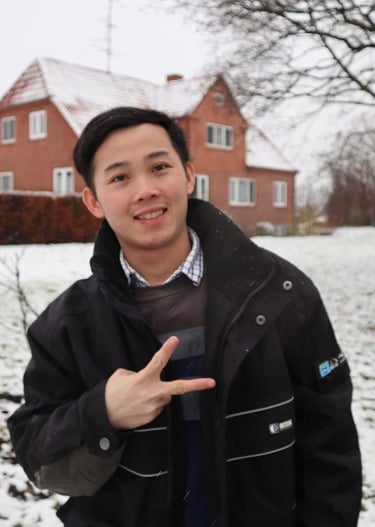
Founder and Farm's Story
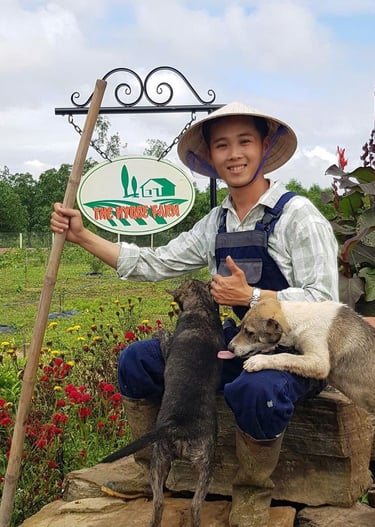
The Hygge Farm, a small farm about 30km from Hoi An ancient town, has become a popular destination for international volunteers and young families looking for authentic experiences.
Instead of pursuing a stable life abroad after years of study and work in Israel, Singapore and Denmark, a young man chose to return to his hometown in Quang Nam to build a farm that nurtures both the land and the community.
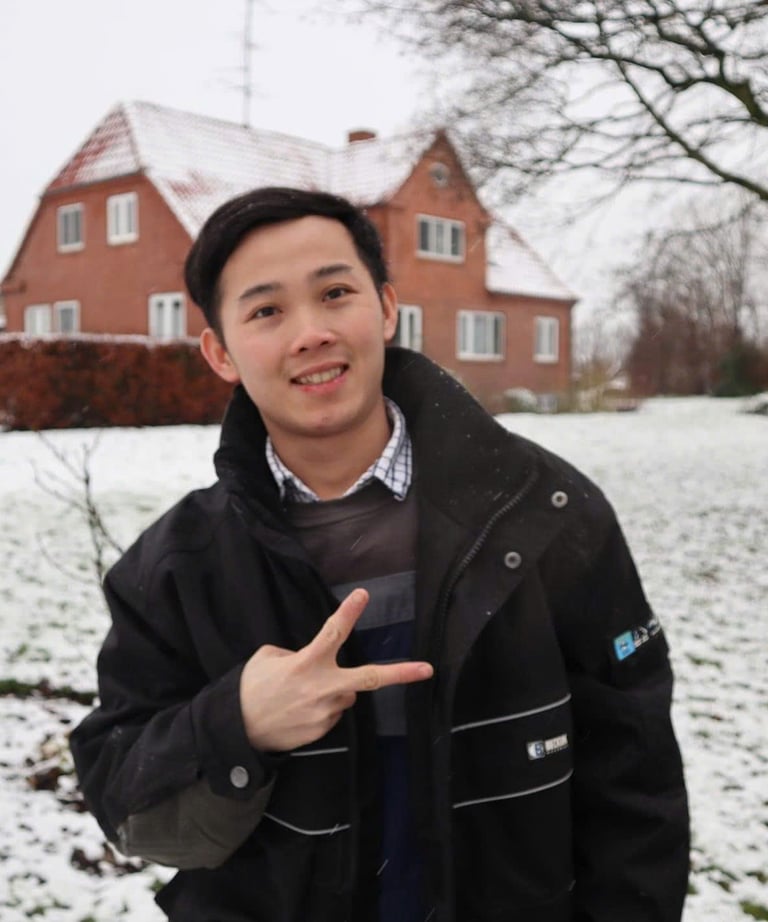
Tran Thanh Ha returned to his home town in the then Que My Commune, Que Son District, Quang Nam Province (now Que Son Trung Commune) to run a farm project aimed at revitalising the local community.
His initiative focuses not only on promoting sustainable agriculture but also on creating opportunities for local children to study English, develop life skills and engage with international volunteers.
According to him, the effort stems from a simple motivation, a sense of responsibility to his hometown.
The Hygge Farm, a small farm about 30km from Hoi An ancient town, has become a popular destination for international volunteers and young families looking for authentic experiences.
Its founder Ha, born in 1993, studied advanced agriculture in Israel, experiential education in Singapore, and worked on organic farms in Denmark.
Many assumed that after those years abroad he would remain overseas, where opportunities and income were more secure. Instead, he chose to return home.
“I grew up as a poor student in a village school. When I went abroad, I realised that my weakness in English was a huge barrier, preventing me from fully absorbing knowledge from developed agricultural systems,” H said.
“That struggle pushed me to create a place where local children could practise English in the most effective way.”
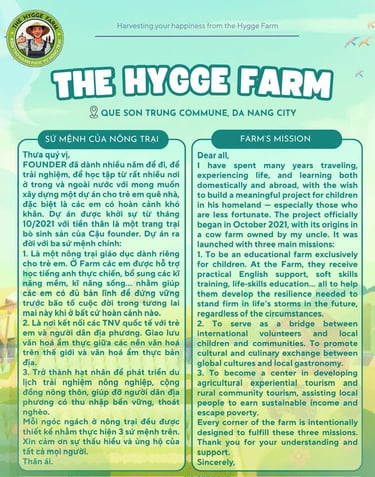
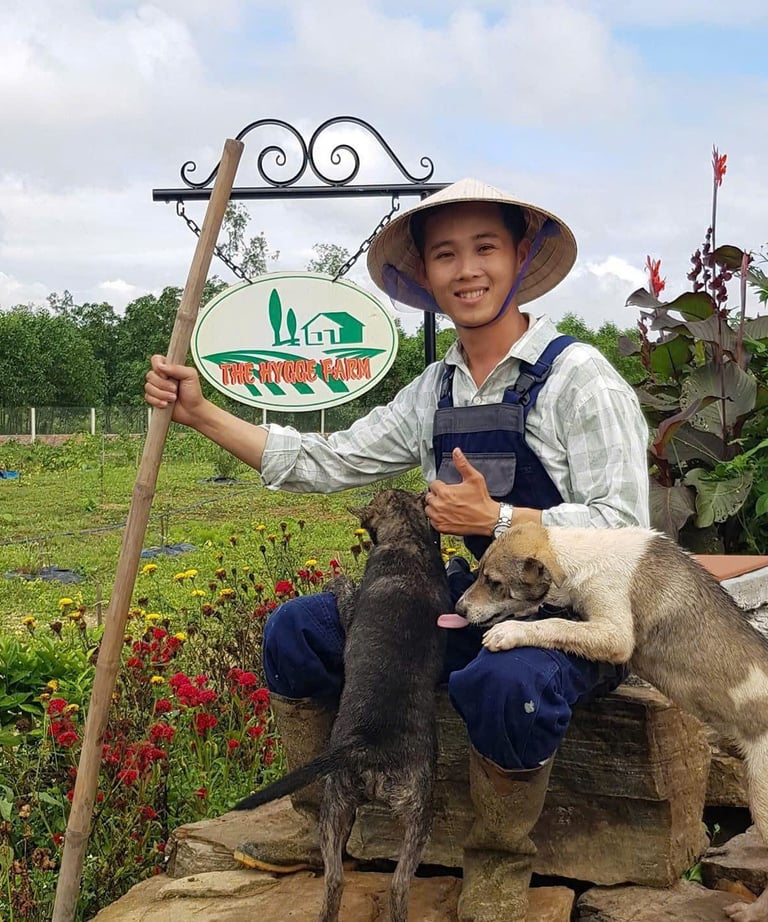
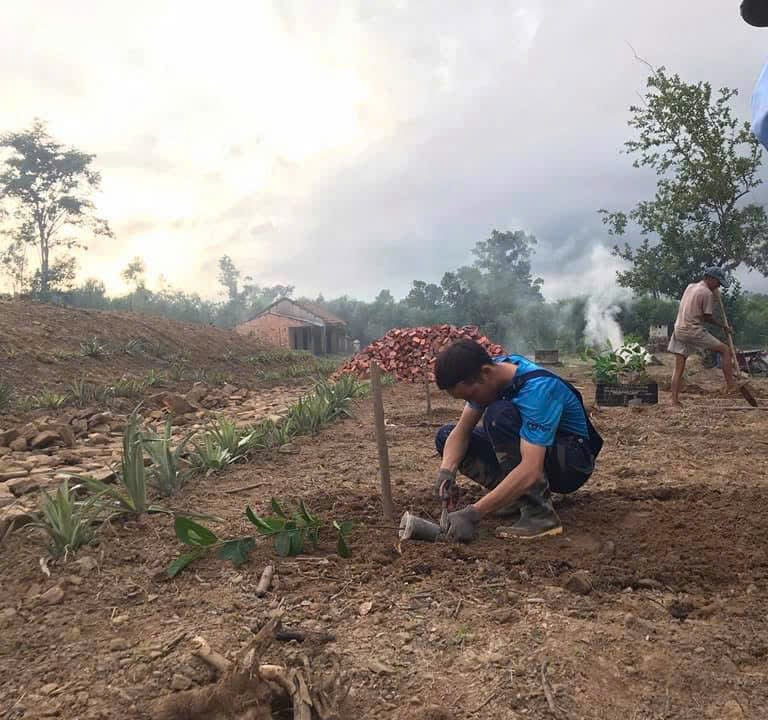
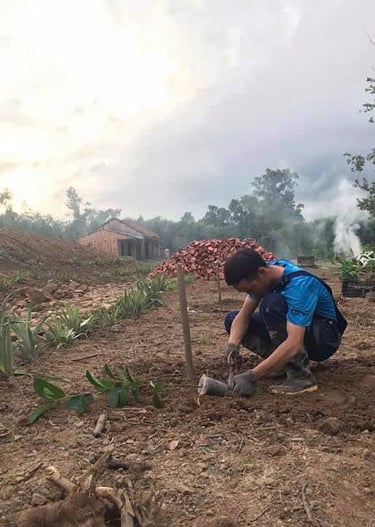
Ha began developing The Hygge Farm on the site of his family’s old cattle farm in October 2021. His aim was threefold: to provide experiential education for children in traditional farming, life skills and English with native speakers; to promote agricultural tourism; and to encourage international cultural exchange.
The beginning was far from easy, especially in an area where most young people had already moved to the cities for better jobs.
When Ha returned, the land was barren, acacia plantations were eroding the soil, and local residents were sceptical.
“People didn’t believe in my plan,” he said. “They were used to traditional ways of farming. When they saw me trying to grow organic vegetables, build thatched cottages and welcome foreigners, they laughed. Some even said I wouldn’t last more than a few days.”
In 2022, Typhoon Noru struck, destroying nearly everything he had built overnight. Despite the setback, Ha refused to abandon his project.
“If I weren’t determined, I would have gone back to the city long ago. I believe that if you work sincerely and persistently, even stones can bloom,” he said.
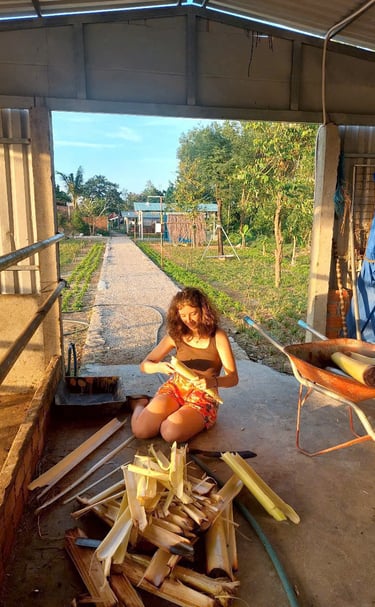
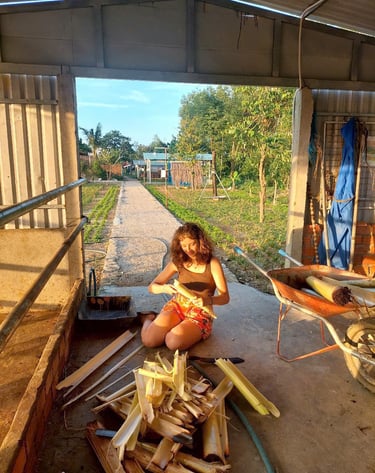
Signs of progress soon appeared. Local children began coming to the farm in the afternoons to plant seeds, collect litter, and practise English with international volunteers.
Many who had once been shy gradually became more confident, starting conversations in English with ease, something few could have imagined in a rural village setting.
The initiative gained momentum. Parents started sending their children, more and more local residents came to visit, and small “Day as a Farmer” tours grew in popularity.
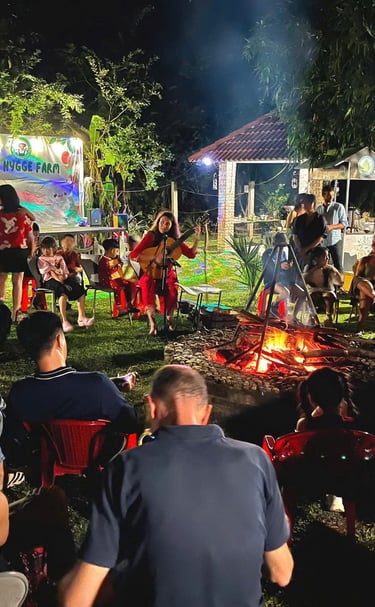
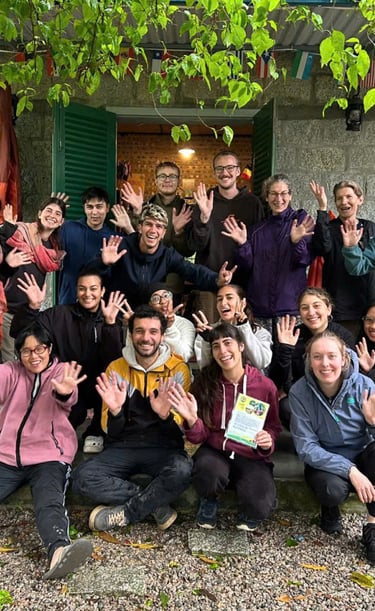
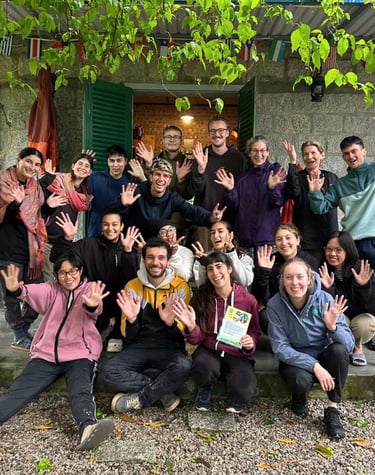
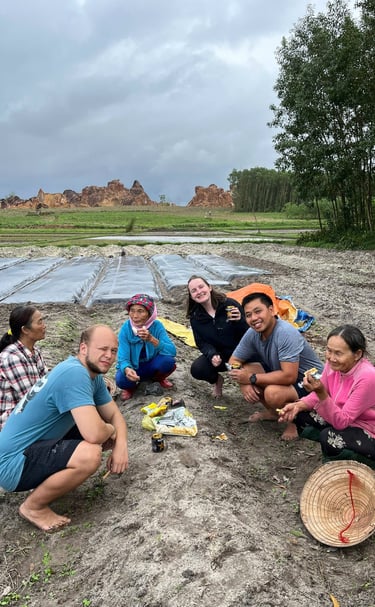
The farm also began to attract a steady flow of international volunteers, bringing with them new connections and positive energy.
During his student years in Hue, Ha developed a small website to connect international volunteers with Vietnamese students. That idea has since evolved into a more practical model in his hometown.
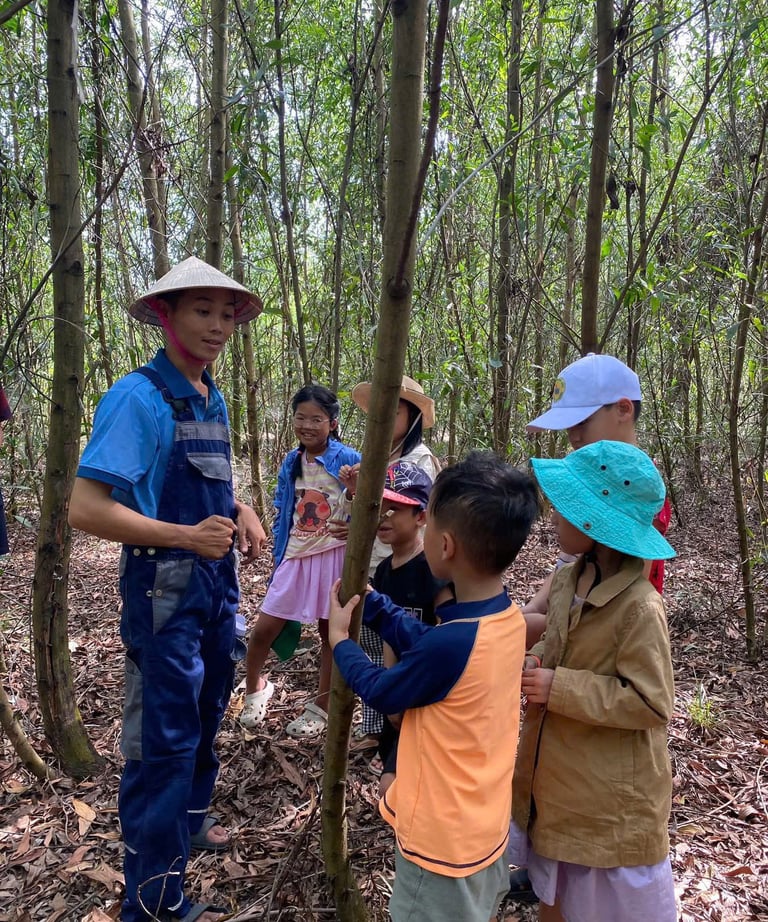
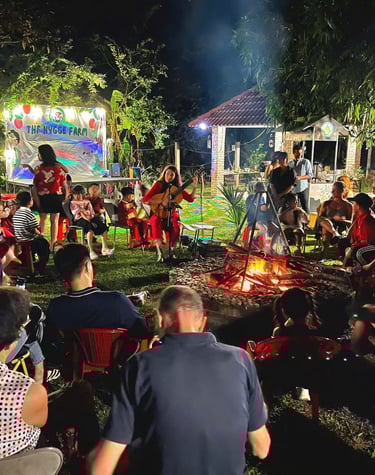
At The Hygge Farm, free English classes are offered to disadvantaged children. Each week, volunteers from countries including France, the Netherlands and the United States stay at the farm, live with Ha, and take part in teaching.
Lessons are held outdoors rather than in traditional classrooms. Children practise English through storytelling, baking, games, planting seeds and harvesting vegetables.
The approach, called “Class Without Walls”, was inspired by Ha’s time in Denmark and adapted to local conditions.
“I want children to learn with joy and ease, and to see English as a tool to broaden their world,” Ha said.
The initiative also extends to university students majoring in English language, agriculture or tourism, who come to the farm for internships and hands-on experience.
Ha believes education must be linked with practice and should begin with the simplest activities.
Unlike commercial farmstays, The Hygge Farm has adopted a slower but more sustainable approach.
The project is built around three core objectives: providing an educational farm where children can learn about the environment, practise life skills and improve their English through hands-on activities; developing agricultural tourism through half-day, full-day and two-day tours that allow families, students and foreign visitors to experience farming and traditional cooking; and creating opportunities for cultural exchange, with international volunteers living and working alongside local residents.
“At the farm, foreigners learn to make traditional cakes, while local children learn to say ‘thank you’ with a smile. Sometimes learning can be as simple and sincere as that,” Hà said.
Environmental education is also integrated into all activities, including efforts to reduce plastic use, reuse materials, sort waste, save water and plant native trees.
Ha believes that instilling a love for nature at an early age will help children grow into adults who care for the environment.
What sets The Hygge Farm apart is not only its model but also the commitment of its founder.
The name “Hygge”, a Danish word meaning “cozy” and “peaceful”, reflects Ha’s vision of creating a place where everyone feels a sense of belonging.
“I don’t dream of changing the whole world. I just want to change a small corner of my village, where disadvantaged children can learn, adults can earn a living, and nature can be preserved. If every young person returns with one good seed, I believe our villages will bloom again,” Hà said.
For him, happiness is not found in grand achievements but in small, courageous decisions, such as the choice to return home and nurture the future on the very land
Our Journey
Explore the story of our founder and the farm's mission.
Our Location
Discover the heart of our farm, where our story unfolds and our mission thrives through sustainable practices and community engagement.
Farm
Đà Nẵng city, Vietnam
Visit
9 AM - 5 PM
The Hygge Farm
Experience farm life and cultural exchange programs.
Contact
+84 975114784
♡ 2025 ♡